
Hurricane Preparedness: Keeping Pets Safe
Living on the Florida Gulf Coast, we know that hurricane season isn’t a matter of if, but when. While we secure our shutter systems, buy bottled water, and clear our yards, it is equally vital to build a concrete, stress-tested safety plan for our four-legged family members.
As a pet parent to Nika the Frenchie and co-owner of Comforting Currents, I’ve navigated our local storm seasons firsthand. I know how quickly a sunny afternoon can turn into an evacuation order for Sarasota and Manatee counties.
One of the most critical, often-overlooked realities of storm safety is that when you are evacuated, you cannot assume your destination will accept animals. To help you protect your companions before a storm tracks toward our coast, here is your expert, locally anchored guide to pet hurricane preparedness.
📞 The Critical Local Contacts to Save Right Now
If an evacuation order is issued for Zone A or B, do not wait until you are in your car to find a safe destination. Space at designated pet-friendly municipal shelters fills up incredibly fast, and hotel pet policies change rapidly during state emergencies.
Before you leave your home, save these numbers directly into your cell phone:
Florida Emergency Information Line (FEIL): Call 1-800-342-3557. This state-run, toll-free hotline updates in real time during active disasters to provide a rolling list of open, pet-friendly shelters and hotels that are waiving pet fees or breed restrictions.
Sarasota County Contact Center: Call 941-861-5000. They provide hyper-local updates on Sarasota's designated pet-friendly shelters (such as Brookside Middle School).
Manatee County Animal Welfare: Call 941-742-5933 (or the main county line at 941-748-4501). They coordinate pet-friendly sheltering locations and emergency animal services for Bradenton, Lakewood Ranch, and surrounding areas.
🎒 Building a Pet "Go-Bag" for Florida Conditions
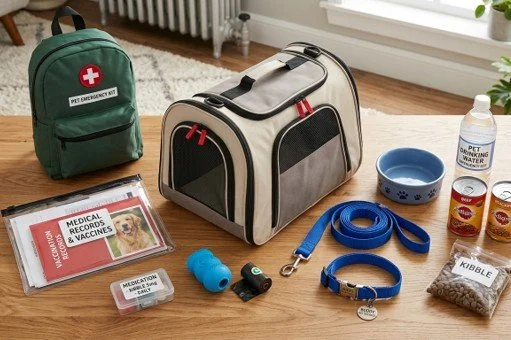
Do not wait for a hurricane watch to gather supplies. True peace of mind means having a dedicated, waterproof, and easily transportable "Go-Bag" packed and sitting by your door before the peak of the season.
Your kit should include:
A 10-to 14-Day Supply of Food and Water: Store your pet's regular food in airtight, waterproof plastic containers. The extreme heat and humidity that follow a Gulf storm will rapidly spoil paper kibble bags. Don't forget a manual can opener for wet food and a dedicated gallon of water per pet, per day.
Vaccination & Medical Records: This is a major hurdle for many families. Public pet-friendly shelters and boarding kennels strictly require physical proof of up-to-date Rabies and DHPP/FVRCP vaccinations before entry to protect the entire group. Keep these records sealed in a waterproof Ziploc bag.
A One-Month Supply of Medications: Ensure you have a backup supply of any daily maintenance medications. Additionally, ask your veterinarian ahead of time for storm-related anxiety aids (such as Gabapentin or Sileo) to help manage extreme barometric shifts and thunder that terrify pets.
Proper Restraints and Hard-Sided Carriers: Emergency shelters require dogs and cats to remain securely crated or on a leash at all times. Make sure your pet's collar has up-to-date phone numbers firmly stamped on the tags—and remember, a wet collar can cause chafing, so pack a dry spare.
🛠️ Critical Steps to Take Before the Storm Knocks
Audit and Update the Microchip: Collars and harnesses can easily slip off in high winds or during a chaotic evacuation. A registered microchip is the single most reliable way to be reunited with your pet. Do not just assume it works—log into your registry database (like HomeAgain or Avid) today and verify that your current cell phone number and Sarasota/Manatee address are correct.
The "Proof of Ownership" Photo: If you are separated, rescue facilities will require proof of ownership before releasing an animal. Keep a recent, high-quality digital photo on your phone—and a printed copy in your Go-Bag—showing you standing directly next to your pet, clearly displaying any unique markings they have.
Establish a Local "Buddy System": Build a mutual emergency pact with a trusted neighbor or local friend who lives outside of your flood zone. Agree to check on or evacuate each other's pets if a storm makes landfall while you are stuck at work, across town, or unable to get past local bridge closures.
Our pets anchor us through life's most beautiful moments, and they rely entirely on us to protect them through the turbulent ones. Take an hour this weekend to audit your emergency kit, check your microchips, and secure your plan.
Stay safe, Sarasota and Manatee families!
Written by: Scott Bacon, Partner / Director of Marketing and Operations
Scott Bacon spent over 20 years managing complex projects, significant budgets, and high-level client relationships at Preferred Hotel Group and Miles Partnership, learning that true success always comes down to how well you take care of people. As a lifelong animal lover who freely admits to becoming a "blubbering mess" whenever he loses a pet of his own, he intimately understands the heavy, overwhelming toll of that goodbye. He channels that personal experience into his work every day, serving as a grounded, deeply empathetic advisor and counselor for families navigating their own grief. Scott is immensely proud to be part of the Comforting Currents team, knowing firsthand that the exceptional, compassionate service they provide makes a profound difference when people need it most.
